
Cet article est actuellement disponible en anglais. Une version traduite arrivera bientôt.
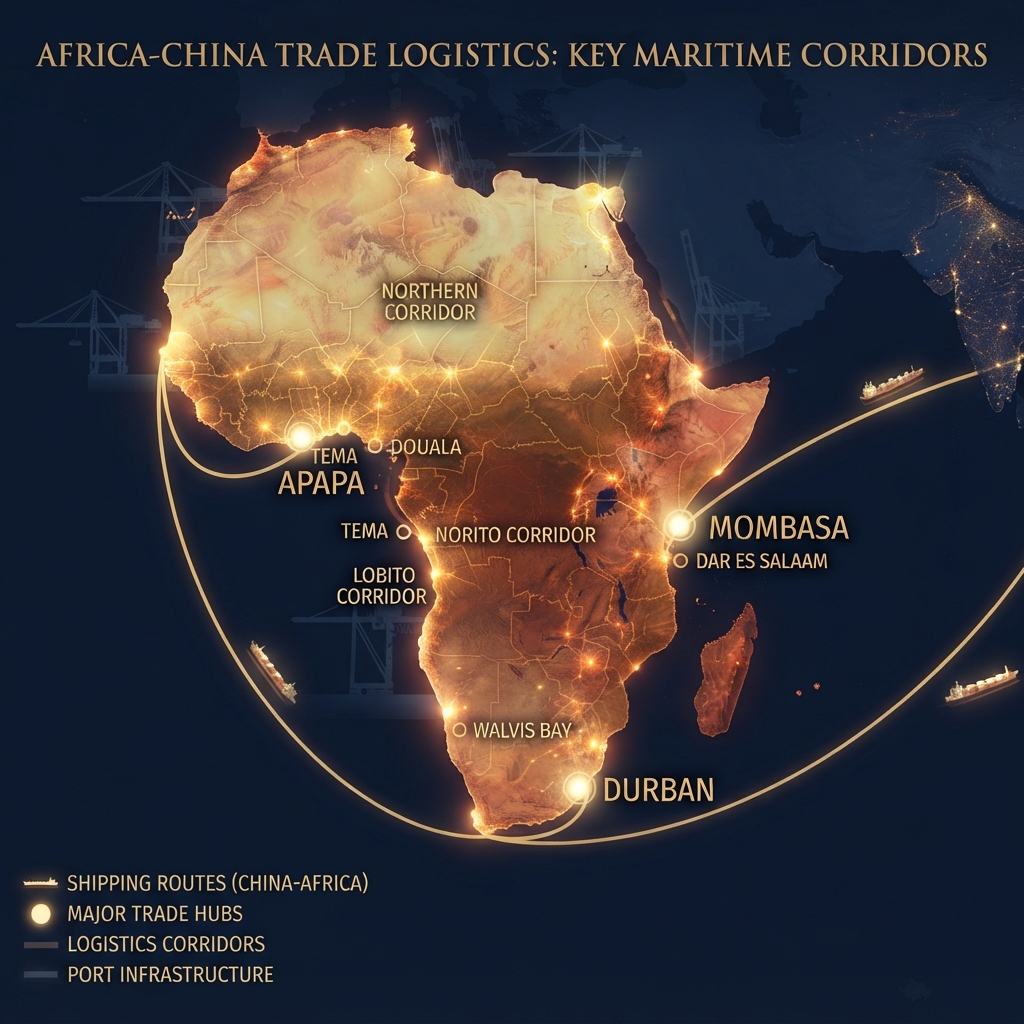
Cameroon is the commercial gateway to Central Africa. The Port of Douala handles cargo not just for Cameroon's domestic market but for Chad, the Central African Republic, and to varying degrees, the CEMAC zone beyond. For Chinese exporters and their African clients, it sits at the intersection of West and Central Africa's supply chains — strategically positioned, consistently in demand, and requiring a level of documentary preparation that catches first-time importers off guard.
This guide covers what you actually need to know before shipping from China to Douala: the documents, the procedures, the costs that don't appear in freight quotes, and the preparation habits that separate a clean clearance from a three-week hold.
The Port of Douala: What to Expect
Douala handles the vast majority of Cameroon's containerised imports. The main container terminal is operated by Bolloré Africa Logistics under a concession arrangement with the Cameroonian port authority (PAD). For most China-origin shipments, your container arrives at the Douala container terminal, goes through customs clearance there, and is collected by your transporter for delivery to your warehouse or premises in the city or beyond.
Transit times from China vary by routing. From major Chinese ports, direct services via the Suez Canal and the Atlantic take approximately 28 to 35 days in normal conditions. Services routed via Tanger Med transshipment — which many West Africa sailings use — typically add 4 to 8 days for the feeder connection. On this corridor, build a minimum 5-day buffer into any delivery commitment to clients. For the full transit picture, see Your Cargo Takes 45 Days from China.
Documents Required for Clearance in Cameroon
Standard import documentation applies — commercial invoice, packing list, Bill of Lading, and Certificate of Origin. But Cameroon has several market-specific requirements that must be in place before the vessel leaves China:
-
ECTN / BESC (Bordereau Electronique de Suivi de Cargaison) — Cameroon requires a BESC, the French-language equivalent of the Electronic Cargo Tracking Note, registered online through an authorised platform before the vessel departs the Chinese port. Your freight forwarder handles this registration, but they need your confirmed Bill of Lading details and cargo information in advance. Missing the BSC is not a clearance inconvenience — it's a financial penalty. Fines can reach up to 20% of the cargo FOB value. See: Pre-Import Verification Schemes.
-
Import Declaration (DI) — goods entering Cameroon above a defined threshold require a formal import declaration registered with the relevant authority before or at the time of customs lodgement.
-
Certificate of Origin — confirming Chinese manufacture. The type required depends on whether any preferential duty rate is being claimed. Most commercial shipments use a standard CCPIT-issued CO.
-
Sector-specific permits — regulated product categories (food products, pharmaceuticals, chemicals, electronics for certain use cases) require additional certificates from the relevant Cameroonian authority. Confirm these with your customs broker before shipping.
⚠️ Watch Out: The most common reason China-Cameroon shipments get held at customs is an HS code that doesn't match the goods description on the commercial invoice. Cameroon's customs authority (DGDDI) applies its own reference valuation database for certain product categories, which means your declared value can also be challenged even when the invoice is genuine. Both issues are preventable — the first by confirming the HS code with your destination broker before the invoice is issued, the second by keeping clean payment records. See: Why Your Cargo Is Stuck at Customs and Customs Value vs. Invoice Value.
How Customs Clearance Works in Douala
Cameroon uses the SYDONIA customs management system. Your broker lodges the customs declaration electronically, attaches all required documents, and the system assigns a risk score. Green channel: release without physical inspection. Yellow channel: document review. Red channel: full physical examination of the container. Red-lane selections at Douala are not rare, particularly for first-time importers and for cargo categories with documented history of classification disputes.
A well-prepared, clean file with a reliable broker typically clears in 4 to 7 working days. A file with any documentation gap, a contested HS code, or a flagged value can extend to 2 weeks or more. Your terminal free time at Douala is limited — confirm the allowance and demurrage rate with your forwarder before the vessel arrives. See: Managing Demurrage and Detention.
Practical Planning for Cameroon Shipments
Before the Booking
Confirm which documents your specific cargo type requires. Get the BSC registration process started early — your forwarder needs vessel and cargo details that aren't always available far in advance, so build lead time into your planning rather than rushing at departure.
Before the Vessel Sails
Send scanned shipping documents to your Douala customs broker the moment they're issued. Pre-arrival clearance preparation begins immediately. Every day of preparation before the vessel arrives is a day that doesn't count against your terminal free time.
After Arrival
Have your transporter briefed and ready before the release order is issued. Douala port congestion is real — factor in 1 to 2 working days from collection authority to physical container exit, and plan your warehouse receiving schedule accordingly.
Transit to CEMAC Markets
If your cargo is moving beyond Cameroon into Chad, CAR, or other CEMAC destinations, additional transit documentation applies. Confirm the full transit requirements with your broker before the cargo ships — not after it arrives at Douala.
👉 Pro Tip: Cameroon's customs authority conducts post-clearance audits, sometimes months after a shipment has cleared. This means your import documentation — commercial invoices, packing lists, payment records, and customs declarations — should be kept in organised, accessible files for at least five years after each shipment. The importer who can produce a clean audit trail quickly is significantly less exposed than one who can't.
Shipping from China to Douala?
Our Operations team manages China-Cameroon shipments end to end, including BSC registration and Douala customs broker coordination.
Get a Quote →Last reviewed: June 2026 · Category: Regional Focus
Related articles: Pre-Import Verification Schemes · Why Your Cargo Is Stuck at Customs · Shipping to Nigeria · East Africa: Mombasa vs. Dar es Salaam · Your Cargo Takes 45 Days from China